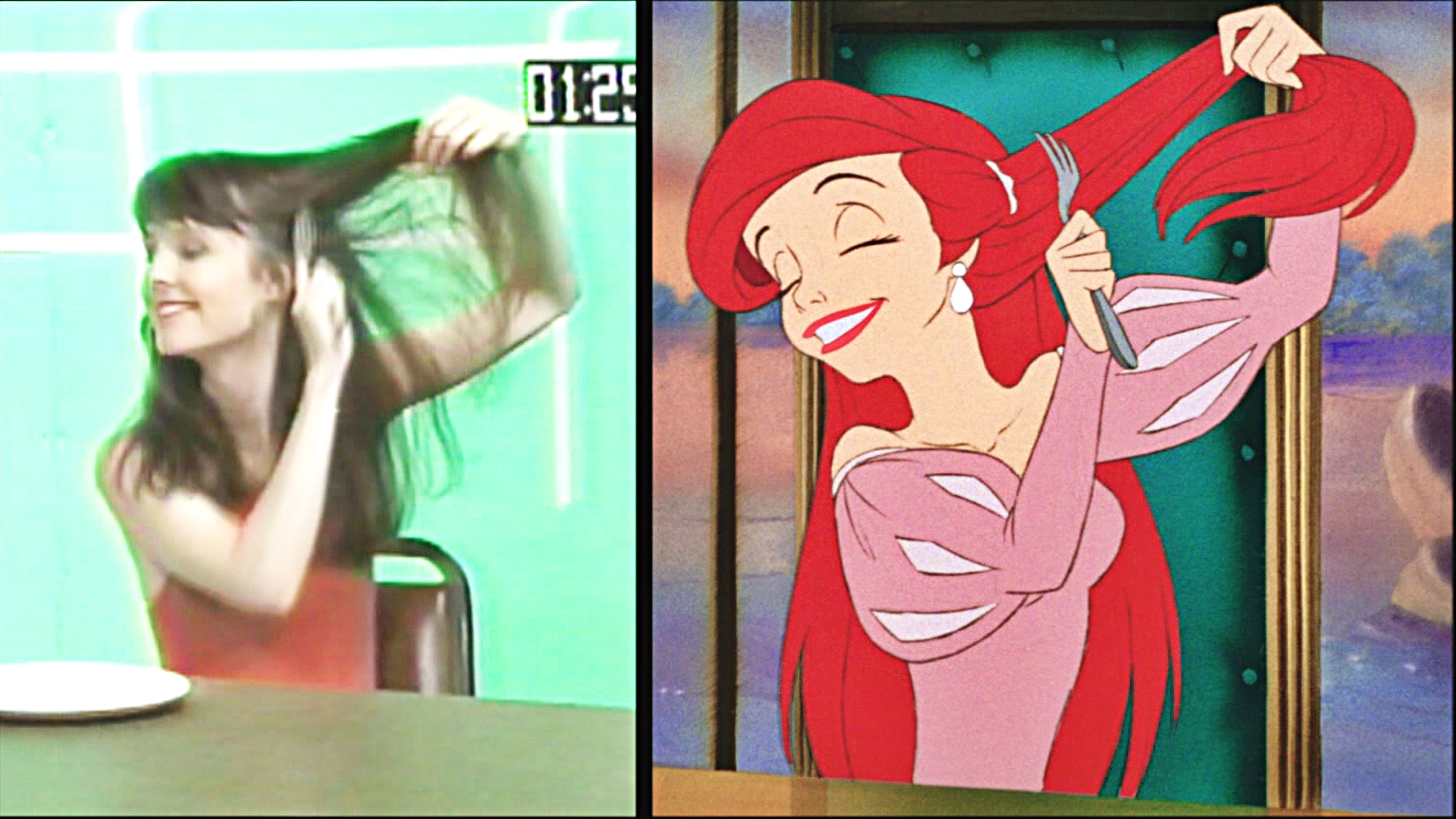
When
animation was still in its infancy, these were the techniques utilized in
producing it:
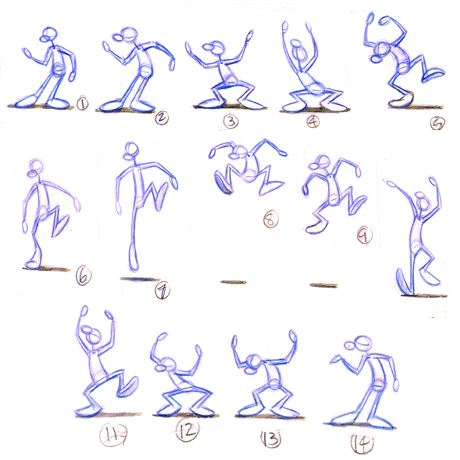
The Cycle: A series of drawings that animated back
into itself by having the last drawing work into the first one, creating a
continuous loop. This technique was ideal for walking, dancing, and scramble
animation.
Repeat Action: An action that could be repeated just
as it was in a second scene, with a new beginning or a different ending.
Examples of this technique could be seen in classic Scooby-Doo shorts, which allowed the creators to save money by
recycling the animation for chase scenes.
The Cross-over: Recycling the action to have two or
more characters repeat in a cycle. How this was done is that inkers would trace
over the same subject multiple times, and even in reverse, to create the
illusion of a whole crowd or a line of dancers. Look closely at the background characters of Beauty and the Beast during the "Be Our Guest" sequence.
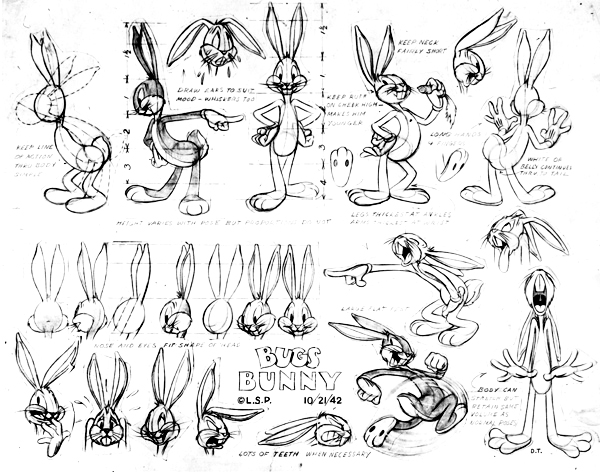
Rubber Hose Animation: In response to the stiff quality of early
animations, animators thought animating appendages and sections to that of a
garden hose. Reasoning that no one would know or understand bones or muscle
structure in an animated character, this technique extremely well in creating
loose and fluid movement. The animation suggested no sense no realism which had
a charm of its own and offered comedic possibilities.
However, Walt Disney disliked this type
of action and was quick to criticize rubber hose animation:
“Get some straight lines in there, like
you’ve got in Oswald. Doesn’t that camel have a knee or an ankle? And you’ve
got the body the same all the time––he can bend back or forward, y’know. And
get rid of those limp noodles: get some drawing in it!” (Johnston & Thomas,
1981, p. 45).
Animation
became more progressed and refined as animators sought after new and better
methods and techniques in conveying the illusion of life and motion. These
techniques were perfected and came to be known as the Principles of Animation:
 Squash and Stretch: The most important technique. When a
fixed shape is moved about from one frame to the next, there is rigidity in its
motion. This does not comply with real life as even the most rigid shapes,
whether it be furniture, dishes, or anything composed of living flesh (no
matter how bony), there is considerable movement and alteration in shape as it
progresses through the action. The most basic example of the squash and stretch
technique is the ball diagram. If a ball were drawn consistently as it
progresses through its fall, there’s bounce or weight to it; it just looks flat
and rigid. Apply the squash and stretch technique, however, and the ball gives
a sense a weight and bounce as it flattens on impact and rebounds after it hits
the surface. Any shape can be animated with the squash and stretch technique,
allowing the subject to move with fluid realism.
Squash and Stretch: The most important technique. When a
fixed shape is moved about from one frame to the next, there is rigidity in its
motion. This does not comply with real life as even the most rigid shapes,
whether it be furniture, dishes, or anything composed of living flesh (no
matter how bony), there is considerable movement and alteration in shape as it
progresses through the action. The most basic example of the squash and stretch
technique is the ball diagram. If a ball were drawn consistently as it
progresses through its fall, there’s bounce or weight to it; it just looks flat
and rigid. Apply the squash and stretch technique, however, and the ball gives
a sense a weight and bounce as it flattens on impact and rebounds after it hits
the surface. Any shape can be animated with the squash and stretch technique,
allowing the subject to move with fluid realism.
Anticipation: Animating a character or a subject in
way that signifies to the audience that the character will behave this way or
take a certain course of action. For example, to signify that a character will
run, he will draw back a raised leg in anticipation of this action.

 |
Link
Art by Sandford Shirk |
Staging: Looking at the animation and subject from all angles. How
is the scene edited? Is the action clear? Does the environment obstruct it?
What is the effect the makers want to convey? These are the elements that
considered in staging a scene, through planning and choreography.
Straight Ahead and Pose to Pose: The
straight ahead pose is when the animator works straight ahead from the first
drawing in the scene. He simply works through one drawing after another,
developing new ideas, and keeping the scene fresh. Pose to pose is similar to
straight ahead, however, instead of the animator working off of spontaneity,
there’s deliberateness in animating the scene as he knows how he wants the
action to play out.
 |
Link
Art By Larry Lauria |
Follow Through and Overlapping Action: Rendering movement more realistically and to give the
impression that characters follow the laws of physics. Characters and body
parts will continue to move even if the character has stopped. Overlapping
actions includes body parts moving at different rates. “Dragging” in which it
would take a few frames for parts of a character to catch up such as clothing,
hair, body parts, etc. Exaggerated use of this technique can produce comical
effects, whereas realistic animation must be timed to produce convincing
results.
Slow In and Slow Out: Moving the human body and other objects
at different rates to create a realistic effect. For example, the bouncing ball
to emphasize the ball’s weight and speed.
 Arcs: Natural actions follow an arched trajectory and thus
animation should adhere to this principle for greater realism. Applies to
rotating limbs or joints, thrown objects. Another example would be the bouncing
ball, which falls and ascends in a V arc.
Arcs: Natural actions follow an arched trajectory and thus
animation should adhere to this principle for greater realism. Applies to
rotating limbs or joints, thrown objects. Another example would be the bouncing
ball, which falls and ascends in a V arc.
Secondary Action: A character or subject moving with
subsidiary action. For example, a character walking and his arms moving
independently to express and emphasize emotion.
Timing: The number of drawings or frames for a given action,
translating the speed of the action on film. An animated film consists of 24
frames per second. If a character were consistently featured throughout a
90-minute film, the amount of frames would be at least 130,000 frames for one character.
Correct timing will an object appear to obey the laws of physics, for instance,
an object’s weight determines its reaction to an impetus. Timing is critical in
conveying a character’s mood, emotion, and reaction.
Exaggeration: Sometimes, to create an imitation of
reality, one must present a caricature of it. Otherwise, a perfect imitation
would look static and dull.
 Solid Drawing: Drawing a character or subject and
taking into account of three-dimensional space, giving them volume and weight.
This makes the character look natural, more real. If handled poorly, however,
the character would look wooden.
Solid Drawing: Drawing a character or subject and
taking into account of three-dimensional space, giving them volume and weight.
This makes the character look natural, more real. If handled poorly, however,
the character would look wooden.
Appeal: A character must look real and interesting. Be wary,
however. A character that is drawn too complex or clumsily done will quickly
lose appeal. It’s always best to use simplicity to create appeal in a character.
 |
Left: Mr. Incredible / Right: Gribble
Left: Caricature, simple, unrealistic: appealing. / Right: Complex, detailed, reaslistic: ugly. |
To
demonstrate a character encapsulating all twelve principles, I choose Disney’s Tarzan. Tarzan was animated by
supervising animator Glen Keane and was the most complex character done during
the Disney Renaissance. For instance, he’s the most anatomically
accurate-–detailed animated character to date, as Keane had worked with other
artists and biologists determining Tarzan’s bone and muscle structure to create
a convincing jungle übermensch. This video goes into detail the methods and
steps Keane and his animation team took to make Tarzan plausible and believable.
If one were to freeze-frame his action scenes, they would find various
parts of his body undergoing the squash and stretch technique as well as slow
in and slow out to illustrate his strength, speed, and agility. At various
points of the film, Tarzan would surf on vines and tree trunks. This is
demonstration of the arc technique as Keane had to animate Tarzan sliding down
naturally to the set pathway using the Deep Canvas technology. As for appeal,
the film takes full advantage of the animated medium by having Tarzan walk on
his knuckles and travel like an ape whereas a normal human can’t, nonetheless, it
further establishes his gorilla upbringing. In addition, Keane and his team had
a little fun showing Tarzan’s innocence as he reacts to civilization. For
example, not understanding personal boundaries as he listens to Jane’s
heartbeat and tries to peak her skirt to see what’s under it, not understanding
the full implications of his actions. Tarzan’s behavior and background enables
him to have appeal as it translate an old, popular character into something new
and fresh.
Works
Cited
Johnston, O., & Thomas F. (1981). The
Illusion of Life: Disney Animation. New York: Disney Editions.